
Systems · 6 min read
Prompt library vs prompt system: what actually ships
Learn the difference between a prompt library and a prompt system, why scattered prompts stall creators, and how reusable AI workflows create consistent results.
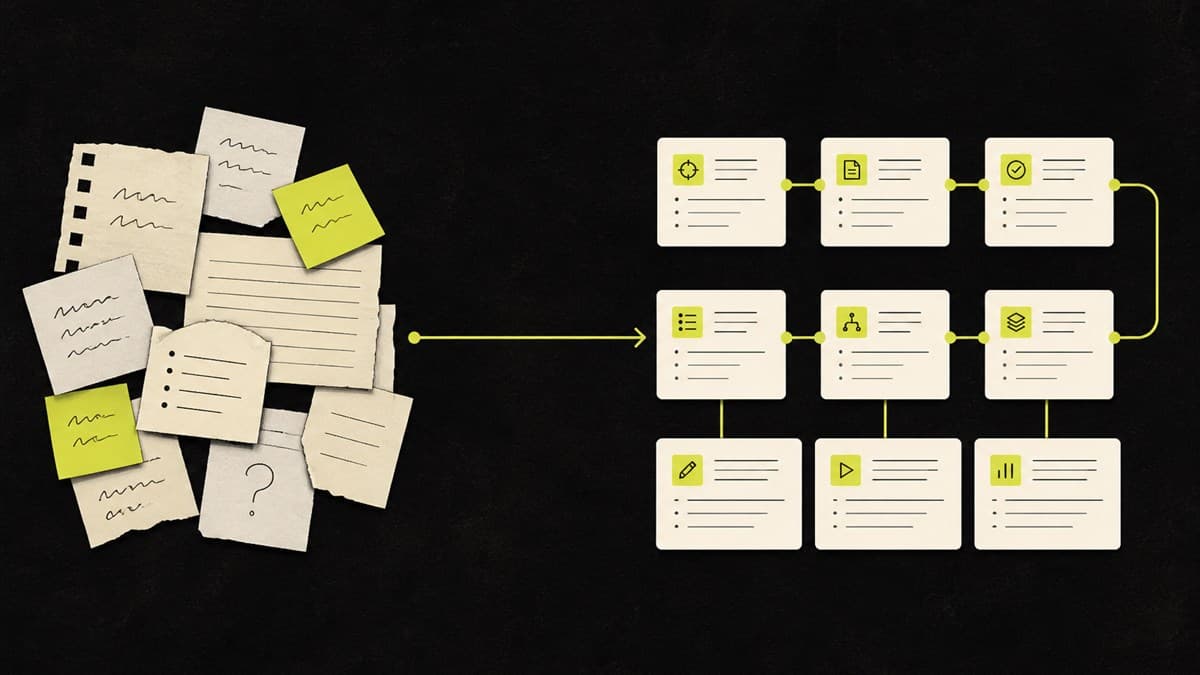
Most creators do not lack prompts. They lack a way to ship. A folder of ChatGPT screenshots and Midjourney strings feels productive until a client deadline arrives and nothing is reusable.
This article compares a prompt library and a prompt system. You will learn what each is for, how to spot the difference, and how to build a workflow that produces consistent AI output for writing, branding, and visuals.
The real problem is not prompt count
Prompt engineering for creators often gets framed as collecting better magic words. That mindset creates clutter. You save twenty hooks, fifteen brand voice prompts, and a pile of image styles. When you need a landing page tomorrow, you still start from scratch.
A library answers "what have I saved?" A system answers "how do I finish this job again with less friction?"
If your goal is better AI results that hold up across projects, the second question matters more.
What a prompt library is good at
A prompt library is a catalog. Useful traits:
- Fast capture of ideas you do not want to lose
- Tagging by tool or topic
- Light inspiration when you feel stuck
Libraries shine for discovery. They are weak for delivery. Without inputs, sequence, and quality checks, each prompt is a one-off experiment.
That is fine for learning. It is fragile for freelancers and marketers who need repeatable client work.
What a prompt system includes
A prompt system is a packaged workflow. Strong systems usually include:
- A clear job outcome (for example, on-brand landing draft)
- Required inputs (audience, offer, voice, constraints)
- Ordered prompts or stages (brief, draft, edit, polish)
- Examples of good and bad output
- Notes on tool fit (ChatGPT, Claude, image tools)
- A stop rule so you know when the draft is done
Promptly positions paid products as systems for this reason. Free prompts can delight. Depth, structure, and scale live in systems.
A simple test: does it ship?
Ask these questions about any pack or personal note stack:
- Can a beginner follow it without you in the room?
- Does it define the inputs before the clever prompt text?
- Is there an edit step after generation?
- Can you run the same flow next month and recognize the brand?
- Does it leave enough free value public while keeping full depth paid, if it is a product?
If most answers are no, you have a library dressed up as a product.
How to turn your library into a lightweight system
You can upgrade what you already have in one afternoon.
Step 1: Pick one job
Choose one recurring job only. Examples: LinkedIn posts, service page intros, Pinterest pin concepts, brand voice rewrites.
Step 2: Write the input card
List the fields you always need. Audience. Offer. Tone. Proof. Format. CTA.
Step 3: Sequence three prompts
- Generate draft from inputs
- Voice and clarity rewrite
- Final cut against a checklist
Step 4: Add a done definition
Example: Reader knows the offer, the voice feels calm and specific, CTA matches the page goal, no invented claims.
Step 5: Store the system as one document
Keep the library as raw material. Keep the system as the operating manual.
This approach beats chasing endless "best prompts" lists.
Commercial investigation: when paid systems make sense
Buy or adopt a paid system when:
- You repeat the same jobs across clients or offers
- Your current notes are messy and slow to open
- You want curated coverage across a category (copy, brand, visuals)
- You value time more than rebuilding frameworks
Stay with a personal system when:
- Your niche is very narrow and your notes already work
- You only need one or two prompts a week
- You enjoy building workflows as part of the craft
Promptly's product pages exist to pitch and prove value, then send checkout to Gumroad. The site teaches and presents. It does not pretend to be a cart.
Internal links that help you go deeper
For briefing ChatGPT on copy jobs, read How to brief ChatGPT so drafts sound on-brand.
For brand consistency across assets, read AI branding prompts that keep your visual identity consistent.
To browse visual results first, open the gallery. To compare packaged systems, visit AI systems.
Mistakes to avoid
Hoarding without rehearsal
Saved prompts that you never run in a real job are digital clutter.
Mixing tools without labels
A Midjourney aesthetic prompt is not a ChatGPT email prompt. Label tool and job.
Selling or sharing full paid packs as free dumps
That burns trust and product value. Teach patterns. Keep depth in the system.
Confusing volume with quality
Fifty disconnected one-liners lose to twelve prompts inside a clear workflow.
A one-week shipping plan
Day 1: Inventory your top 20 prompts and tag by job. Day 2: Choose one job and write the input card. Day 3: Build the three-stage sequence. Day 4: Run it on a live asset. Day 5: Edit the system based on what broke. Day 6: Add one example of good output. Day 7: Decide whether to keep it personal or explore a packaged system.
By the end of the week you will feel the difference between collecting and shipping.
Case study walkthrough: freelance designer
Imagine a freelance designer who saved 80 prompts across Notes apps. Tags are messy. Client work still starts with a blank ChatGPT box.
They pick one job: homepage intros for design clients. They write an input card: niche, offer, tone, proof, CTA. They build three stages: draft, voice rewrite, clarity cut. They run it on two real clients in one week.
What changes is not the number of prompts. What changes is the path from intake to shipped copy. That is a system.
How Promptly thinks about free vs paid
Promptly is a content and discovery site first. Gallery results and blogs create trust and attention. AdSense monetizes depth. Gumroad systems are secondary revenue for people who want structured packs.
That means public content should:
- Show results
- Teach useful methods
- Softly invite systems
- Never dump an entire paid pack
If a product page exists, it should pitch outcomes and contents clearly, then send checkout outside Promptly.
Evaluation rubric before you buy any prompt pack
Score each item from 1 to 5:
- Outcome clarity
- Input templates included
- Sequence or workflow stages
- Editing guidance
- Honest tool fit
- Example quality
- Non-overlap with free content you already have
If the total is low, keep building your personal system. If the total is high and the job is frequent, buying can be rational.
Organizing prompts without another abandoned Notion graveyard
Use one active system doc per job. Use one archive library for leftovers. Review monthly. Promote or delete.
Promotion criteria: used twice in 30 days. Delete criteria: never opened in 90 days and superseded.
This keeps prompt engineering practical instead of collectible.
Systems thinking for mixed tools
You may use ChatGPT for copy, an image model for pins, and Notes for storage. A system can still span tools if each stage names the tool and the handoff.
Example handoff: Copy stage output becomes the pin text brief. Visual stage uses the same audience and offer fields. Edit stage checks both against the brand kit.
Tool diversity is fine. Missing handoffs are not.
Bottom line
A prompt library helps you remember. A prompt system helps you finish.
If you want better AI output on purpose, keep libraries for inspiration and invest energy in systems you can run under pressure. That is how creators, marketers, and freelancers turn AI from a toy into a tool.
FAQ
- What is a prompt library?
- A prompt library is a collection of saved prompts, often sorted by topic. It helps you store ideas, but it may not include workflow order, evaluation criteria, or reuse rules.
- What is a prompt system?
- A prompt system packages prompts with structure. Categories, sequence, inputs, outputs, and editing steps turn one-off prompts into repeatable work.
- Do I need to buy a system if I already save prompts?
- Not always. If your notes already include voice rules, job briefs, and revision steps, you may already have a lightweight system. Buy when you want curated depth and speed.
- How do I evaluate an AI prompt pack before buying?
- Check for clear outcomes, categories, sample patterns, tool fit, and whether free content already covers the same ground. Avoid packs that only dump disconnected one-liners.
Related gallery prompts
 Natural Light Creator PortraitA warm, approachable lifestyle portrait with soft window light, ideal for creator, coach, or brand-human visuals.
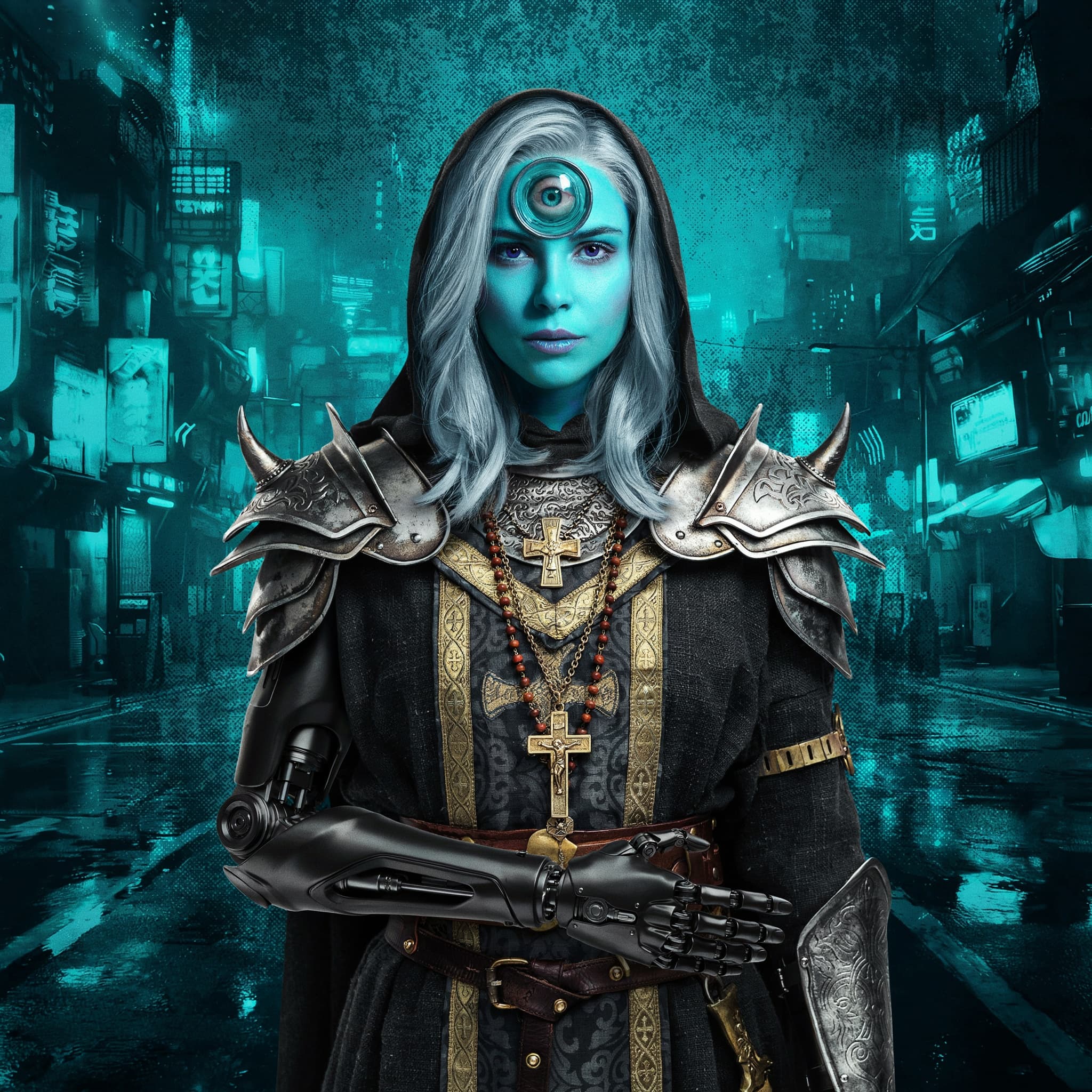 Cyber Third-Eye PortraitA teal cyberpunk portrait with a mechanical third eye and bionic arm, high-detail pin bait with clear prompt structure.
 Alpine Meadow Anime SceneA serene anime frame of a traveler in a wildflower meadow under a snow peak, cinematic calm with vivid color.