Branding · 7 min read
AI branding prompts that keep your visual identity consistent
Use AI branding prompts to lock voice, naming, and visual identity so ChatGPT and image tools stay consistent across assets without random one-off looks.
AI makes it easy to generate a lot of brand-ish stuff. A new logo concept on Monday. A different color story on Tuesday. A voice that sounds bold in an email and soft on the website. That speed without guardrails creates brand drift.
This guide shows AI branding prompts that protect consistency across voice, naming, and visuals. You will build a compact brand kit you can paste into ChatGPT and image tools so output feels intentional.
Consistency is a system problem
Brand identity is not one pretty moodboard. It is repeated choices:
- Who you serve
- What you promise
- How you sound
- What you look like
- What you refuse
AI tools will invent the missing pieces unless you supply them. That is why random "make me a brand" prompts fail for freelancers and solopreneurs who need assets that match.
Build a one-page brand kit for prompts
Keep this kit short enough to paste. Long brand books get ignored mid-chat.
Positioning line
One sentence: Promptly shows the results of great AI use, then gives prompts, education, and systems to recreate them.
Audience
Creators, marketers, freelancers who want better AI output without chaos.
Voice traits
Calm. Specific. Practical. Premium restraint.
Words to prefer
Systems. Prompts. Results. Clear. Useful.
Words to avoid
Magic. Revolutionary. Game-changer. Secret hack.
Visual anchors
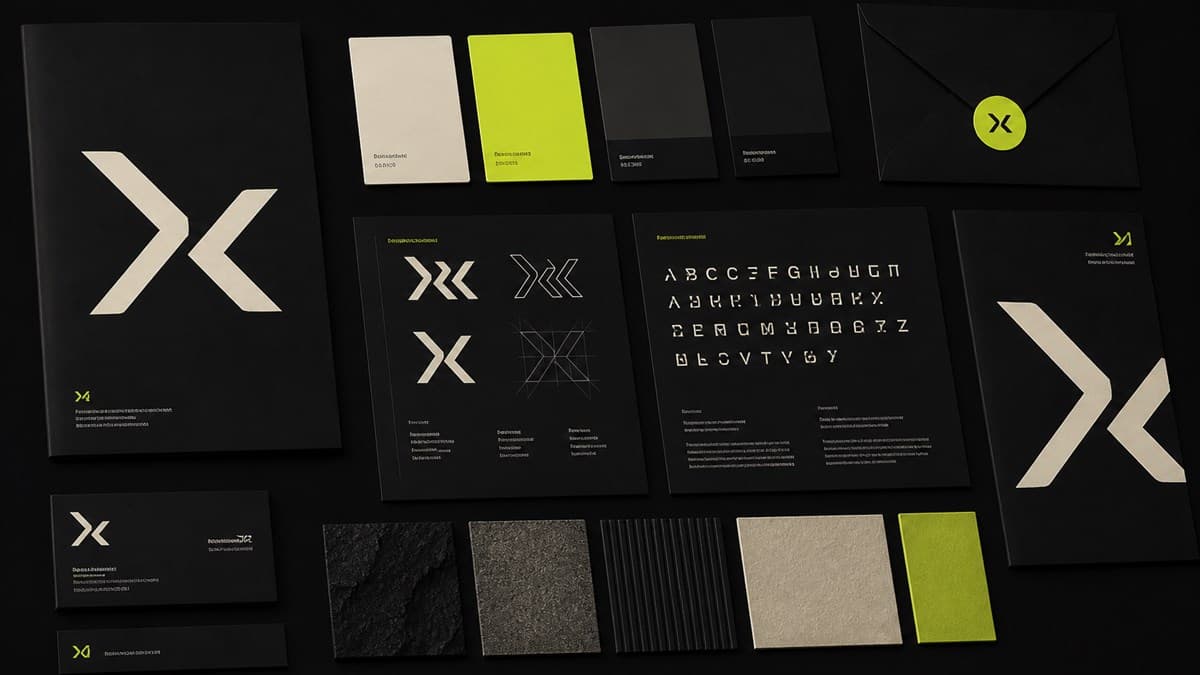
Ink backgrounds. Cream type. Sparse lime accents. Clean geometry. No purple hype gradients.
Do not list
No fake urgency. No cluttered dashboard layouts on marketing pages. No dumping full paid packs in free content.
When this kit lives in your prompt, AI branding gets easier because the model stops guessing.
Voice prompts that stay on-brand
Use a voice lock before any copy job.
Using this brand kit: paste kit
Rewrite the text below in our voice. Keep meaning. Cut hype. Prefer short, concrete sentences. Flag any line that still sounds generic.
Already discussed this briefing method in How to brief ChatGPT so drafts sound on-brand.
Naming prompts without chaos
Naming is where teams chase fifty options and pick none. Constrain the search.
Generate 12 name candidates for [offer]. Audience: [who] Promise: [one line] Must feel: [3 traits] Must avoid: [cliches or competitor patterns] For each name, give a one-line rationale and a risk. Do not force invented spellings unless asked.
Then run a second pass that checks domain vibe, pronunciation, and overlap with known tools. You decide. The model suggests.
Visual identity prompts that repeat
For image tools, consistency comes from repeating a visual kit paragraph.
Brand visual kit: ink black fields, cream typography energy, sparse lime accent, calm premium tech craft, clean negative space, no purple gradients, no neon glow spam. Create [asset type] featuring [subject]. Keep the palette and mood locked to the kit. Vertical 2:3 if used for pins.
See how finished results can teach the eye in the gallery, then adapt prompts rather than reinventing the world each time. For pin composition detail, read AI image prompts that hold up as Pinterest pins.
A weekly brand consistency ritual
- Update the one-page kit if messaging changed.
- Generate or revise one written asset with the voice lock.
- Generate or revise one visual asset with the visual kit.
- Compare both against the do-not list.
- Save winners into your prompt system, not a random camera roll.
This ritual beats quarterly brand panic.
Mistakes that create AI brand drift
New aesthetic every session
If every prompt starts from a new trend word, you get a collage, not an identity.
Voice traits without bans
Telling the model to be "bold" without banned phrases still produces LinkedIn sludge.
Letting AI invent proof and origin stories
Fabricated history destroys trust. Keep facts human-approved.
Treating a single logo prompt as a brand system
A mark is one artifact. Systems include voice, usage, and workflows across pages and posts.
Free teaching vs paid brand systems
Free articles and gallery examples should help you practice. A full Brand System is for people who want packaged prompts and workflows across naming, voice, and identity jobs without rebuilding the kit alone.
That split keeps Promptly honest: show results, teach methods, sell structured depth.
Practical checklist before you publish any AI brand asset
- Does it match the positioning line?
- Would it still feel like your brand with the logo removed?
- Are banned words gone?
- Is the visual palette within your anchors?
- Did you avoid fake urgency and clutter?
If you cannot check these boxes, revise before you post.
Cross-channel consistency map
Run the same kit across:
- Website hero
- Product page voice
- Social captions
- Pin imagery
- Sales PDF intros
Each channel has format differences. Voice and visual anchors should not randomly change.
Create a simple matrix in your notes:
Channel | Format rules | Kit fields reused Website | longer sections | full voice + visual Social | short lines | voice prefer/avoid Pins | vertical visuals | visual kit Email | conversational | voice + honesty rules
Collaboration prompts for freelancers and clients
When clients request AI help, send them your kit and a rules message:
See how finished results can teach the eye in the gallery, then adapt prompts rather than reinventing the world each time. For pin composition detail, read AI image prompts that hold up as Pinterest pins.
A weekly brand consistency ritual
- Update the one-page kit if messaging changed.
- Generate or revise one written asset with the voice lock.
- Generate or revise one visual asset with the visual kit.
- Compare both against the do-not list.
- Save winners into your prompt system, not a random camera roll.
This ritual beats quarterly brand panic.
Mistakes that create AI brand drift
New aesthetic every session
If every prompt starts from a new trend word, you get a collage, not an identity.
Voice traits without bans
Telling the model to be "bold" without banned phrases still produces LinkedIn sludge.
Letting AI invent proof and origin stories
Fabricated history destroys trust. Keep facts human-approved.
Treating a single logo prompt as a brand system
A mark is one artifact. Systems include voice, usage, and workflows across pages and posts.
Free teaching vs paid brand systems
Free articles and gallery examples should help you practice. A full Brand System is for people who want packaged prompts and workflows across naming, voice, and identity jobs without rebuilding the kit alone.
That split keeps Promptly honest: show results, teach methods, sell structured depth.
Practical checklist before you publish any AI brand asset
- Does it match the positioning line?
- Would it still feel like your brand with the logo removed?
- Are banned words gone?
- Is the visual palette within your anchors?
- Did you avoid fake urgency and clutter?
If you cannot check these boxes, revise before you post.
Cross-channel consistency map
Run the same kit across:
- Website hero
- Product page voice
- Social captions
- Pin imagery
- Sales PDF intros
Each channel has format differences. Voice and visual anchors should not randomly change.
Create a simple matrix in your notes:
Channel | Format rules | Kit fields reused Website | longer sections | full voice + visual Social | short lines | voice prefer/avoid Pins | vertical visuals | visual kit Email | conversational | voice + honesty rules
Collaboration prompts for freelancers and clients
When clients request AI help, send them your kit and a rules message:
Please generate options using this kit only. Do not introduce new brand colors or hype phrases. Provide 3 options and a note on which kit rules each option follows.
This reduces revision loops and protects identity when multiple people touch ChatGPT.
Measuring brand drift
Once a month, collect five recent AI-assisted assets. Score each:
- Voice match (1 to 5)
- Visual match (1 to 5)
- Claim honesty (1 to 5)
Anything under 4 gets a rewrite and a kit update if needed. Drift becomes visible instead of vibes-based.
When to expand the kit
Expand when you launch a new offer, enter a new audience, or add a new visual medium. Do not expand because a trend appears on social media.
Stable brands change on purpose. AI makes accidental change too easy. Your kit is the brake.
Brand kit starter template
Copy this and fill it once:
Promise: [one line] Audience: [who + friction] Voice traits: [3] Prefer words: [3 to 6] Avoid words: [3 to 6] Visual anchors: [palette + materials + lighting mood] Do not: [layout or claim bans]
Keep it on one page. If it no longer fits on one page, you are collecting essays instead of operating rules.
Example: applying the kit to a hero rewrite
Off-brand AI draft: Revolutionize your workflow with our magical AI suite built to empower visionary teams.
On-brand rewrite direction: Get better AI results with prompts and systems you can reuse. Built for creators who want clarity, not clutter.
Notice the shift: reader, outcome, banned hype removed, brand promise present. Repeat that standard every time.
Visual series planning
Instead of one-off images, plan a series of five assets that share the kit:
- Portrait style frame
- Product or desk still
- Lifestyle environment
- Abstract motif using brand shapes
- Social crop of the strongest result
Series thinking is how brands look intentional on Pinterest and on site galleries.
Closing
AI branding works when constraints are clear. Lock voice. Lock visual anchors. Repeat them. Consistency is not a vibe you hope for. It is a prompt habit you run on purpose.
FAQ
- How do I keep image prompts on-brand?
- Reuse a short visual kit in every prompt: palette, materials, lighting mood, and subjects to avoid. Consistency comes from repeating constraints.
- What should be free vs paid in brand prompt content?
- Free content can teach patterns and show examples. Full kits with broad coverage and workflows belong in a structured brand system.
- Who is this for?
- Solopreneurs, freelancers, and small teams who use ChatGPT and image tools but struggle to keep assets feeling like one brand.
- Can AI create a full brand identity for me?
- AI can accelerate drafts for names, voice lines, and visual directions. You still decide strategy, proof, and final taste. Treat AI as a studio assistant, not the brand owner.